The Sagaponack General Store Went Viral. The Village's Fix Is Three P...
read article
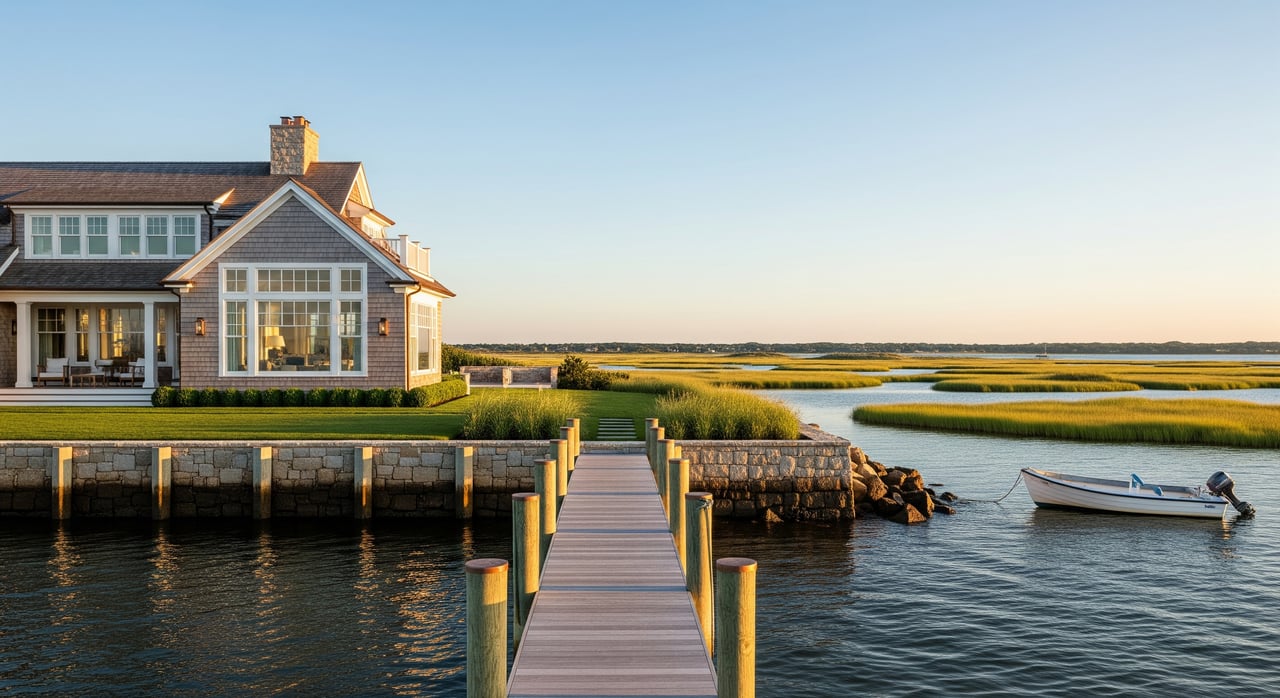
What is your water view really worth? If you own a waterfront home in Water Mill, you know that no two shorelines, views, or docks are the same. When it is time to appraise, those details can swing value by six figures or more. In this guide, you will learn how appraisers in the Hamptons think about frontage type, view corridors, docks and bulkheads, flood risk, and renovation level, plus practical steps to support the strongest valuation. Let’s dive in.
Appraisers rely on three core methods, but one is usually the star for single-family homes on the East End.
This is the primary method for residential waterfront properties in Water Mill. The appraiser finds recent, competitive sales and adjusts for differences like frontage type, view quality, dock or bulkhead, permits, condition, lot size, flood risk, and elevation. Because waterfront features drive most of the value, matched-pair sales and local evidence carry the most weight.
When comparable sales are limited or when improvements are new, the cost approach can support the contributory value of items like a new bulkhead, dock, or major renovation. The appraiser considers cost new minus depreciation and then reconciles the result with what buyers actually pay in the Water Mill market.
For single-family homes, this is rarely the lead method. It may be considered when seasonal rental income is a meaningful factor for investor-owners, but it is usually secondary to sales comparison.
Not all “waterfront” is valued the same. In Water Mill, the type of frontage is a top selection criterion for comps and a major value driver.
Direct Atlantic frontage typically commands the highest premium due to surf access, open-horizon views, and the prestige associated with true oceanfront. Appraisers treat it as a distinct submarket. Elevation, dune stability, and regulatory constraints also factor into the final opinion of value.
Bayfront on areas influenced by Mecox Bay or Shinnecock Bay can be highly valued. Protected waters, boating access, and calmer viewscapes appeal to many buyers. Navigability, dock potential, and privacy levels help determine whether bayfront approaches oceanfront pricing in a given case.
Frontage on ponds or tidal estuaries varies by water quality, privacy, ecological rules, and navigability. Some buyers prize the tranquility and birdlife. Others prioritize boating and may value a pond setting less if boat access is limited.
View premiums are about what you see and how secure that view is over time.
Appraisers distinguish unobstructed panorama, partial or angled views, channel or marina views, and seasonally blocked views. The wider and more consistent the horizon, the larger the typical premium. If a view corridor is protected by deed restrictions or scenic easements, the perceived permanence supports value.
Temporary obstructions are treated differently than permanent ones. A hedge can be trimmed. A neighboring home at as-of-right height is permanent. Documentation that protects the view can tilt adjustments in your favor.
In a coastal market, sightlines change with foliage and weather. Appraisers consider whether views open up in winter or disappear in summer. Panoramic sunrises or sunsets over the water increase buyer appeal and can support stronger adjustments when paired-sales confirm the effect.
Water access and shoreline protection are critical to value, especially for buyers who boat.
A permitted private dock or a recently constructed bulkhead in good condition typically has positive contributory value. Unpermitted or failing structures often trigger negative adjustments due to the risk of removal, repair, or required mitigation with agencies. Work that complies with Town of Southampton permits, NYS Department of Environmental Conservation guidance, and U.S. Army Corps oversight is more marketable.
Private, deeded direct access usually outweighs shared or public access. Riparian or tidal rights, easements, or restrictions such as no-boat zones directly affect utility and appraisal conclusions. Clear, recorded rights support stronger value.
Docks and bulkheads come with ongoing maintenance and potential insurance considerations. Appraisers weigh condition, remaining useful life, and operating costs when reconciling the net effect on marketability.
Coastal setting is an asset, but risk and costs must be addressed head-on.
Flood-zone classifications such as VE, AE, or X, along with the property’s lowest-floor elevation relative to Base Flood Elevation, influence value and lending. A current Elevation Certificate that shows living space above BFE supports better risk perception and can lead to stronger valuations.
Ocean-exposed homes in VE zones can face higher premiums and wind-surge risk, while elevated or protected sites may see more favorable costs. Appraisers analyze how insurability and projected premiums affect buyer willingness to pay.
Buyers in Water Mill respond to both design and durability. Appraisers do, too.
Features such as storm-rated windows and doors, reinforced foundations, elevated mechanicals, and modern septic upgrades contribute to marketability. When supported by permits and invoices, these items can justify positive adjustments.
Modern, coastal-appropriate interiors and outdoor living spaces that capitalize on the water setting resonate in the Hamptons. Appraisers look for paired-sales that show buyer response to these upgrades and apply condition adjustments accordingly.
Adjustments must be credible, consistent, and supported by market evidence.
Appraisers prefer matched pairs where two otherwise similar properties differ primarily by the feature in question. The price difference isolates the market-supported adjustment for things like a permitted dock or an unobstructed horizon view.
If paired-sales are scarce, the appraiser may use cost to replace a feature, minus depreciation, then reconcile to actual buyer behavior. Documentation, such as contractor estimates for a bulkhead or dock, helps anchor these figures to reality.
In high-demand coastal markets, frontage and view adjustments are often significant and can be expressed as percentages when land value dominates. For example, an appraiser might analyze oceanfront premiums using a percentage adjustment to a comparable inland sale, or apply a dollar adjustment for a permitted deep-water dock. Illustrative ranges discussed in appraisal practice can span from single digits to double-digit percentages for view differences, and tens of thousands to several hundred thousand dollars for dock or bulkhead contributions. Final numbers in Water Mill must come from recent local sales and documented costs.
Provide organized, verifiable records. You make it easier for the appraiser to support a higher opinion when the facts are clear.
Show, do not tell. Visual clarity reduces uncertainty and supports stronger adjustments.
The Hamptons are seasonal, and timing matters. Encourage use of the most recent closed sales with similar seasonal context. If the market has shifted since a prior season, time adjustments may be appropriate. Share any relevant private or off-MLS sales you know about to improve the comp set.
If you want a discreet, pre-appraisal consultation or help positioning your property for a record result, connect with Matthew Breitenbach. Request Private Access.
Elevate your real estate strategy with a discreet, advisory-led approach—connect with Matthew Breitenbach.