
Amagansett's Center of Gravity Moved West This Summer. Here's the Map.
read article
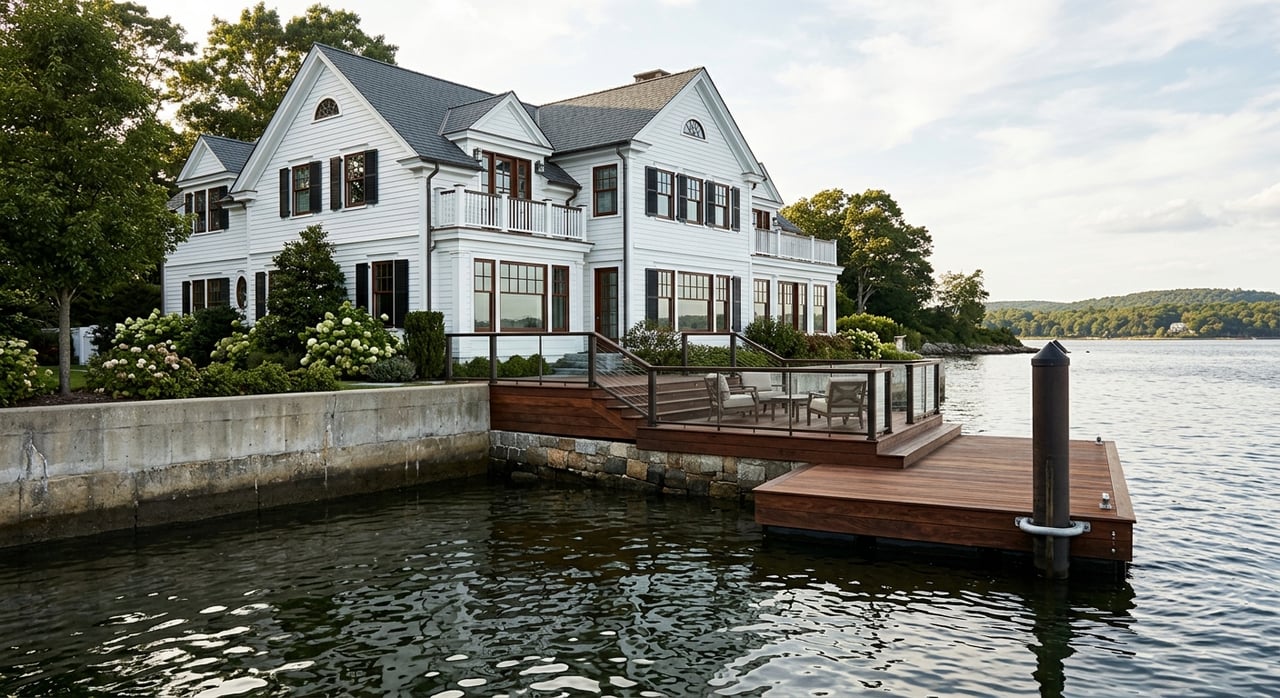
If you are deciding between a waterfront home and a village home in Sag Harbor, you are not just choosing a view. You are choosing how you want to live there every day, how much flexibility you want with the property, and what kind of planning comes with ownership. In a village with historic streets, active waterfront rules, and parcel-specific considerations, the right answer depends on how you plan to use the home. Let’s dive in.
Sag Harbor is not a one-note market. It is an incorporated village on eastern Long Island with a compact footprint, shoreline along Sag Harbor Bay and Sag Harbor Cove, and a built environment that spans homes from the mid-1700s to the present.
Much of the village, including the full business district, is listed on the National Register of Historic Places. That matters because your decision is rarely just “waterfront versus village.” In Sag Harbor, it is more often about the specific parcel, its zoning, its overlay districts, and how you want to use the property over time.
The shoreline also carries its own planning framework. Sag Harbor’s Waterfront Overlay District was created to preserve public views, pedestrian character, direct access to the water, and water quality. For buyers, that means a waterfront purchase can offer a very special lifestyle, but it can also come with tighter rules than expected.
The clearest way to decide is to start with your routine. If being on the water is the point, a waterfront property will likely feel worth the tradeoffs. If you care more about walking to Main Street, dining nearby, and having a more village-centered rhythm, a home away from the shoreline may be the better fit.
This sounds simple, but it is often where buyers get off track. They may love the look of a harborfront property but end up using the home more like a village base. Or they may assume a village home will be simpler, only to find historic-review or utility questions that affect renovation plans.
A waterfront home is usually the right fit when direct water use is a top priority. If you want harbor views, boating access, and a setting where the water is part of your day-to-day experience, this is the strongest case for buying on the shoreline.
Sag Harbor’s marine facilities add to that appeal. The village Harbormaster manages seasonal and transient dockage and moorings, and village marina facilities are noted as being a short walk to shops, restaurants, and public bus transportation. That blend of marine access and village convenience is a meaningful advantage for buyers who want both.
For some buyers, the view is the lifestyle. For others, it is about keeping a boat nearby, enjoying waterfront entertaining, or simply waking up with the harbor as part of the setting. If that is your priority, a waterfront address may be hard to replace.
The tradeoff is that waterfront lots are more regulated. In Sag Harbor’s Waterfront Overlay District, waterfront lots are limited to 25 feet in height and two stories, require a minimum 30-foot waterfront-yard setback from the mean high water line, and must provide visual-access yards.
There are also practical restrictions on expansion and site planning. Buildings over 3,500 square feet in the district require a special exception permit, and accessory structures are not allowed in view corridors or public access areas. In real terms, that can affect additions, exterior changes, and how much design flexibility you have later.
If you are buying with a long renovation horizon in mind, these rules matter as much as the view. A property that feels perfect today may not support the future changes you imagined, so the planning framework deserves close review before you make an offer.
Waterfront ownership also brings a different level of due diligence. Sag Harbor adopted a Tidal Flood Hazard Overlay District to address flooding and erosion risks that can affect housing and public facilities.
For buyers, the practical takeaway is straightforward. If a property is in a special flood-hazard area identified by FEMA, flood insurance is generally required by federally regulated lenders, and long-term ownership may involve more attention to resilience, maintenance, and insurance review.
This does not mean a waterfront purchase is the wrong decision. It means you should go in with clear eyes and evaluate the full ownership picture, not just the setting.
A village-centric home offers a different kind of ease. Instead of direct water access, you gain closer proximity to Sag Harbor’s business district, where the village includes retail, restaurants, accommodations, and civic and cultural institutions.
For many buyers, that creates a more convenient daily pattern. If you want to step out for coffee, dinner, or errands and stay connected to the center of the village, this can be the more practical fit.
It is also a good option if your time in Sag Harbor is split between weekends, summer visits, or shorter stays. In those cases, being near Main Street can feel more useful than maintaining a waterfront property with additional exposure and oversight.
A village home is not automatically simpler. Sag Harbor’s historic-review framework is active, and a Certificate of Appropriateness is required when work is done in the Historic District.
The Building Department also directs applicants to Chapter 300 for setbacks and lot coverage, and some projects may still require approvals from the Suffolk County Health Department or the Department of Environmental Conservation. So even a charming in-village property can involve architectural review, permit coordination, or variance work.
That is especially important if you are drawn to older housing stock or a house that appears ready for expansion. In Sag Harbor, character and convenience can come with process.
Utilities and parking are two details that deserve more attention than buyers often give them. According to the March 2024 Sewer Master Plan, about 13% of village parcels are sewered, while most other parcels rely on on-site wastewater treatment systems.
The plan also notes that sewered areas are located mostly in the downtown and waterfront business areas, and sewer-capacity requests are reviewed case by case. That means you should confirm whether a specific home is connected to sewer service or uses an on-site system.
Parking is another quality-of-life issue. The village currently issues resident parking permits for municipal lots and Havens Beach, so convenience may vary by address and by how you plan to use the property during the season.
If you are weighing both options, this framework can help bring the choice into focus.
Before making an offer in Sag Harbor, there are four property-specific items worth confirming early. These are often the factors that shape cost, timeline, and ownership experience the most.
Start with the property’s base zoning. This affects what can be built, expanded, or altered over time and sets the framework for the rest of your planning.
Confirm whether the parcel is in the Waterfront Overlay District or the Tidal Flood Hazard Overlay District. These designations can affect building envelope, setbacks, insurance review, and future project planning.
Find out whether the home sits within the Historic District. If it does, exterior work or other changes may require additional review and approvals.
Verify whether the parcel is sewered or relies on on-site wastewater treatment. This can influence renovation planning, carrying costs, and how the property functions long term.
In Sag Harbor, the best purchase is usually the one that matches how you will actually live. Waterfront homes deliver access, views, and a strong sense of place, but they often require more diligence around regulation and exposure. Village homes can offer convenience and a more effortless routine, but they still deserve careful review for historic, utility, and permit considerations.
If you are looking at the market through a long-term lens, this decision should be made parcel by parcel, not by assumption. The right guidance can help you separate what is beautiful from what is practical and identify the home that fits both your lifestyle and your plans.
If you are considering a purchase in Sag Harbor and want discreet, informed guidance on waterfront and village opportunities, connect with Matthew Breitenbach.