The Long Game: Building a National Network Around the Hamptons
read article
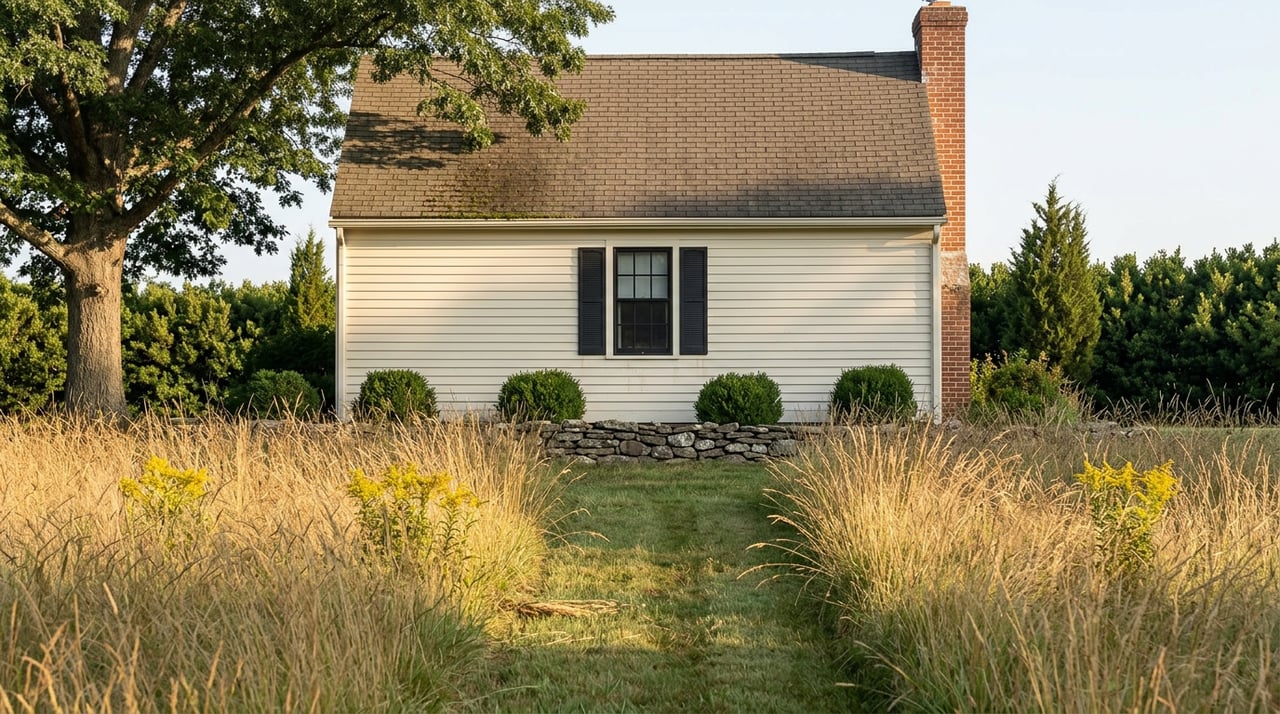
Walk west on Wainscott Main Street past the Wainscott Chapel and the Conklin House at Sayre's Path, and the road opens into something rare on the South Fork: an unbroken field running down to water, with no roofline breaking the horizon. That field belongs to the town now. The view across it, the reason people stop their cars there, does not.
In December 2024, East Hampton closed on 30 acres at 66 Wainscott Main Street for $56 million in Community Preservation Fund money, the town's largest CPF acquisition. Most people who watched that closing assumed the whole property, meadow included, was now protected the way a landmark is protected: permanently, on paper, regardless of who owns it next. That assumption is where the confusion starts, and it's still not resolved as of a March 2026 public hearing where residents showed up again to argue for the missing piece.
The property is known locally as the John Osborn Homestead, and the purchase included the Louisa Edwards Osborn farmhouse, a barn converted into what's called the Osborn Hedges garage, and one accessory building. When the East Hampton Town Board finalized the deal, it designated only those structures as historic landmarks. The 30 acres of surrounding meadow, the field that has been mowed but not farmed since at least the early 1980s, and the sightline from Main Street down to Wainscott Pond, were left out of the landmark status entirely.
That distinction sounds procedural until you realize what it means in practice: the buildings are locked in, but the field around them is governed by a management plan the town board is still drafting, not by the stronger protections that apply to a designated landmark. A future board, a future plan revision, or a future use the current draft doesn't anticipate could change what happens on that acreage in ways a Main Street resident driving past today wouldn't expect from a $56 million preservation purchase.
The Wainscott Heritage Project, the nonprofit that has pushed for this kind of protection since it formed in 2021 to save the Little House, a former farmworker residence on Wainscott Hollow Road, has been the loudest voice asking the board to close that gap. Esperanza Leon, the group's president, put the argument to the town board plainly at the March 2026 hearing:
"The John Osborn Homestead is not merely a collection of old buildings. It is a rare, intact survivor of our community's early settlement period."
Her point wasn't sentimental. It was structural: a farmhouse means something different sitting in the middle of an open field than it would surrounded by a parking area or a new outbuilding, and the landmark designation as written protects the object without protecting the setting that makes the object legible.
Covered by the 2024 landmark designation | Left to the still-pending management plan |
|---|---|
The Louisa Edwards Osborn farmhouse | The 30-acre meadow surrounding it |
The Osborn Hedges garage (formerly a barn) | The view from Main Street to Wainscott Pond |
One accessory building | Limits on future paving, event use, or outdoor lighting |
That third row is where the current fight actually lives. At the March 2026 hearing, the draft management plan under discussion covered a walking loop, agricultural operations, duck hunting, parking, and water quality remediation for Wainscott Pond, but WHP pointed out the draft said nothing about event size limits or restrictions on commercial activity, illumination, or amplified music on land the town now owns outright. Residents who spoke at that hearing were largely in favor of a mowed path through the property rather than a paved one, and several argued that any agriculture allowed there should be tightly restricted so the open sightline isn't broken up by new farm structures.
Jaine Mehring, another WHP board member, made the case at a November 2025 board session that the group's position hadn't changed: the entire 30-acre parcel needs a full historic designation, not just the buildings sitting on it. The management plan returned to the board that December as scheduled, and the public hearing on it took place in March 2026, the same hearing where WHP again asked the board to landmark the complete site to preserve what the group has called its historical synergy. As of the most recent reporting, the town board had not issued a final ruling on whether to extend protection beyond the two structures already designated.
None of this is abstract for anyone who actually uses that stretch of Main Street. The pond itself has its own water quality concerns that residents raised again at the March hearing, separate from the landmark question but tied to it: whatever happens on the meadow, from grazing decisions to drainage work, affects what flows into Wainscott Pond. The Wainscott Heritage Project's ask, in short, has been to treat the land, the buildings, and the water as one connected system rather than three separate line items in a town budget.
You don't need to attend a town board meeting to understand what's at stake. The Wainscott Heritage Project runs a public calendar built around exactly this kind of hands-on local history:
These aren't reenactments. They're the same people who show up at town board hearings, walking you through the same fields they're arguing about, in the same season the argument is happening.
Wainscott Pond isn't the only water in the hamlet, and if the meadow debate makes you want to see the bigger picture from a kayak instead of a walking path, the public launch for Georgica Pond sits on Route 27 on the Wainscott side, a straightforward ramp used by paddleboarders and kayakers heading out onto the 290-acre lagoon that borders Wainscott and East Hampton. It's worth checking the New York State Department of Environmental Conservation's harmful algae bloom notifications before you put in, since Georgica Pond has its own history of bacteria and algae advisories tied to septic runoff, the same category of water quality issue driving part of the Wainscott Pond conversation a few minutes down the road.
A $56 million public purchase feels like a period at the end of a sentence. In this case it's closer to a comma. The buildings at 66 Main Street aren't going anywhere. The meadow, the view, and the pond behind it are still being decided in real time, at hearings residents keep showing up to, by a board that hasn't yet ruled on the one request the Wainscott Heritage Project has made consistently since 2021: protect the setting, not just the structures.
If you own property near that stretch of Main Street, or you just walk it on weekends the way most of the hamlet does, the practical takeaway is simple. The next management plan hearing is the one that will decide whether that open sightline down to Wainscott Pond stays legally protected or stays exactly as vulnerable as it's been since the deal closed. Following the Wainscott Heritage Project's public meetings is currently the only way to know which way that goes before it's decided.
Matthew Breitenbach and the team at Breitenbach Advisory work across Wainscott and the rest of the East End every day, and we pay attention to exactly this kind of local decision because it shapes the character of the neighborhoods our clients call home. If you want a conversation about what's happening on your street, not just what's on the market, reach out to request private access.
Elevate your real estate strategy with a discreet, advisory-led approach—connect with Matthew Breitenbach.