The Sagaponack General Store Went Viral. The Village's Fix Is Three P...
read article
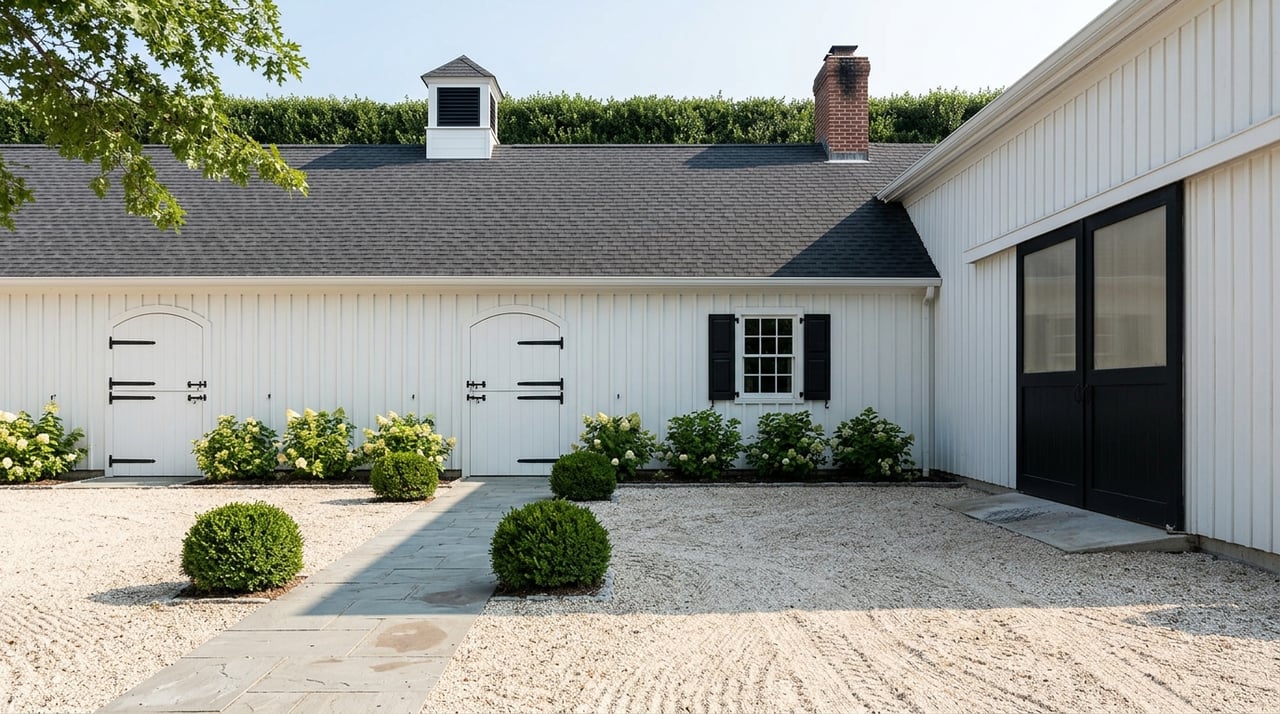
If you are searching for a true equestrian estate in Bridgehampton, the headline price is only the beginning. What really determines value is whether the land, barn layout, and riding infrastructure can support your goals within Town of Southampton rules. This guide walks you through the factors that matter most, from acreage and indoor arenas to paddocks, trail access, and tax considerations, so you can evaluate a property with more clarity. Let’s dive in.
Bridgehampton is not just another luxury pocket within Suffolk County. It operates in a distinct Hamptons pricing tier, with the Douglas Elliman and Miller Samuel Q4 2025 report showing a median sales price of $6,990,000 for Bridgehampton single-family and condo sales, compared with $2,337,500 for the Hamptons overall.
That same report recorded 16 closed sales, 57 listings, and 10.7 months of supply in Bridgehampton. For buyers and sellers, that matters because equestrian properties sit inside an already rarefied micro-market, where land utility and long-term scarcity can influence pricing just as much as architecture or finish level.
Bridgehampton also carries a real horse-country identity. The Hampton Classic Horse Show lists its venue at 240 Snake Hollow Road in Bridgehampton, and the 2026 show is scheduled for August 23 through August 30, 2026. Combined with local trail resources and riding culture, that gives the village a lifestyle connection that many luxury markets simply do not have.
In Bridgehampton, gross acreage can be misleading. What often matters more is usable acreage that can legally and practically support horse keeping, turnout, riding areas, access, and support functions.
Under the Town of Southampton code, horse keeping requires 30,000 square feet of open land per horse on parcels up to 15 acres. On land above 15 acres, the requirement drops to 20,000 square feet per horse.
That rule is one of the clearest examples of why two parcels with the same stated acreage may not offer the same equestrian value. Setbacks, layout, wetlands, circulation, and the placement of existing improvements can all affect how much open land is actually functional for your intended horse program.
A property can look expansive on paper and still fall short in practice. If barns, driveways, parking, residence placement, or constrained areas consume too much of the site, your ability to add paddocks, turnout, or future equestrian improvements may be limited.
That is why land planning should happen early. Before you assume a parcel can handle a certain number of horses or support future upgrades, you need to test the site against open-land requirements, setbacks, and operational layout.
A beautiful residence with a few stalls is not automatically a premium equestrian asset. In this segment, value tends to rise when the equestrian infrastructure is both well built and well aligned with the code.
The Southampton code treats horse farms, horse stabling facilities, and horseback riding academies as special exception uses. It also places tight controls on indoor equestrian structures, which means a buyer should never assume a future arena or stabling expansion will be straightforward.
According to the Town code provisions for horse-related uses, an indoor riding training track, exercise ring, or horse stabling structure is allowed as an accessory structure only on parcels of 10 acres or greater. These structures must also meet minimum setbacks of 150 feet from a street line and 200 feet from other property lines.
Size is restricted as well. The code limits these structures to 15,000 square feet on parcels under 25 acres and 24,000 square feet on parcels 25 acres or larger, with only one such structure per 10 acres.
For valuation, this is critical. A site that already accommodates a compliant indoor arena, or one that clearly has the room and geometry to do so, may carry stronger long-term utility than a property with impressive aesthetics but limited entitlement flexibility.
The same code section states that architectural style should be compatible with surrounding agricultural buildings and the neighborhood. Screening may also be required, and parking must be set back and screened.
Those rules shape both development cost and resale appeal. A barn complex that feels integrated into the site and already respects local standards is often more valuable than one that will need redesign, added screening, or additional approvals.
Paddocks are easy to underestimate when touring a property. Yet from an ownership standpoint, turnout areas directly affect horse health, labor demands, drainage performance, and ongoing maintenance costs.
The University of Minnesota Extension guidance on mud management recommends high-traffic pads, proper grading, drainage, gutters, and frequent manure removal to reduce runoff and disease risk. It also notes that compacted soil has poor infiltration, which can make wet conditions worse over time.
For you as a buyer, that means paddock quality is not just cosmetic. A well-designed turnout system can reduce mud, improve usability in different seasons, and lower the risk of expensive corrective work later.
When evaluating a property, it helps to look beyond fencing and first impressions. Ask whether the site appears to support:
These details may not photograph as dramatically as a main house or pool, but they often matter more for real equestrian performance.
A luxury barn should not be judged by finishes alone. Function matters, and ventilation is one of the most important variables.
According to University of Minnesota Extension guidance on horse-barn ventilation, barns need adequate air exchange to remove moisture, reduce condensation, and support air quality. The same guidance notes that wet bedding and manure should be removed daily.
That information has direct value implications. A barn that handles moisture, airflow, and routine management well is likely to perform better over time than one that looks polished but falls short on basics that affect horse comfort and building durability.
Indoor and outdoor rings are often treated as major selling points, but the real question is whether the footing system is credible. A ring only adds lasting value if its base, drainage, material selection, and maintenance needs are appropriate for the site.
Penn State Extension’s arena footing guidance notes that footing cost depends on local material availability and transportation. It also emphasizes that good footing should provide traction and cushioning, while normal upkeep includes watering and conditioning.
In practical terms, a finished arena is not automatically a premium feature. If the footing drains poorly, requires heavy correction, or demands unrealistic maintenance, it can quickly shift from asset to expense.
Part of Bridgehampton’s appeal is that equestrian ownership here connects to a broader riding culture. That adds a lifestyle dimension that can strengthen demand for the right property.
The Town of Southampton park guide and Southampton Trails identify Bridgehampton within an active local trail network, including Long Pond Greenbelt Trail in Bridgehampton. Southampton Trails also says its Horses on Trails program encourages recreational horseback trail riding.
At the county level, Suffolk County Parks horseback riding information states that horseback riding is allowed only on marked trails in selected county parks and requires a Green Key Card plus a horseback-riding permit. For buyers, this reinforces that access exists, but it should be understood within local rules and permit structures.
Some buyers assume a large horse property can also function as an event venue or broad commercial equestrian operation. In Bridgehampton, that assumption can create problems.
Under the Southampton code, horse shows, rodeos, and other equestrian spectator events are generally prohibited except for a limited number of events on parcels of 10 acres or more. The code also states that unrelated commercial uses, such as a tack-shop-style retail operation, are not permitted.
This matters for both acquisition and underwriting. If your vision includes instruction, boarding, events, or other revenue-generating activity, you need to evaluate the exact permitted use and review path before treating that upside as part of the property’s value.
For some owners, New York’s agricultural assessment program may materially affect annual carrying costs. This can be especially relevant if the property operates as a legitimate commercial horse-boarding asset rather than simply a private estate with equestrian amenities.
According to the New York State agricultural assessment overview, commercial horse boarding land may qualify if it has at least seven acres, boards at least 10 horses, and produces at least $10,000 in annual gross receipts from boarding or related agricultural activity. Start-up operations may also qualify in their first or second year.
The same source makes clear that the benefit does not automatically apply to residences or all improvements, and land associated with the owner’s residence is ineligible. In other words, this can be meaningful, but it requires careful review rather than assumption.
The strongest Bridgehampton equestrian estates are rarely defined by looks alone. They tend to be the properties where legal use, site planning, and infrastructure quality are already aligned.
If you are evaluating a purchase, redevelopment, or legacy hold, focus on a few core questions:
In this segment of Bridgehampton, those answers often separate a true equestrian asset from an expensive home with limited horse utility.
If you are considering the acquisition or positioning of a Bridgehampton equestrian estate, working with a local advisory team can help you evaluate value beyond the obvious. For discreet guidance on land utility, market context, and private opportunities in the Hamptons, connect with Matthew Breitenbach.
Elevate your real estate strategy with a discreet, advisory-led approach—connect with Matthew Breitenbach.