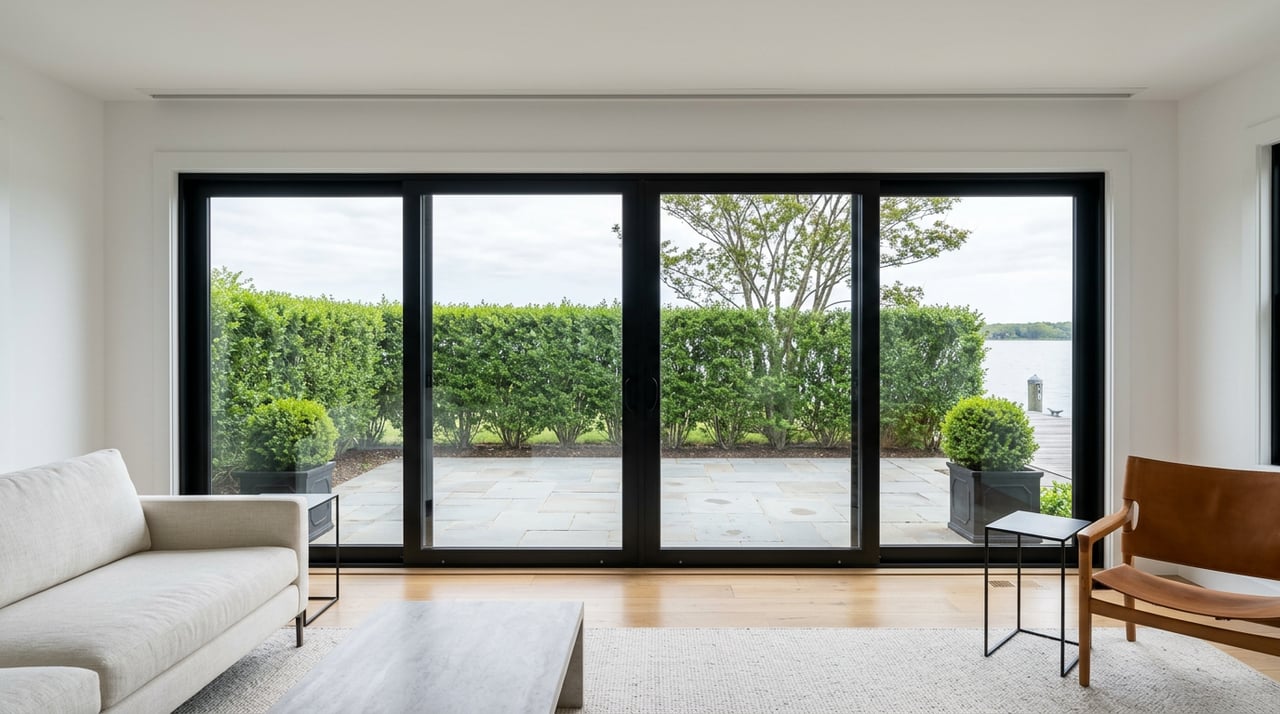
Selling a waterfront home in Water Mill is not a standard listing. Global ultra-wealthy buyers are selective, data-driven, and often rely on advisors to vet properties before they fly in. You want a marketing plan that meets that standard, protects your privacy, and positions your shoreline asset as a scarce, high-performance holding. In this guide, you’ll see how to package your property, which channels actually reach UHNW buyers, how to balance public prestige with private outreach, and what a best-practice campaign looks like in Water Mill. Let’s dive in.
Why global buyers choose Water Mill
Water Mill sits in a prime Hamptons corridor where trophy trades drive headlines. The broader Hamptons market has remained resilient since 2021, with a single-family median around the $2.0M range in 2025 and continued momentum at the top end. That backdrop supports a confident, globally oriented marketing stance for waterfront sellers. You can review recent luxury trends in the Hamptons market data from Elliman and Miller Samuel for context on the top tier and overall pricing in 2025 here.
At the village level, numbers can move fast due to small sample sizes and the impact of very large trades. For example, Water Mill’s reported median shifted significantly between early and later 2025 releases, illustrating why you should treat single-quarter medians as high-variance signals. Multi-quarter trends and trophy comps matter more for pricing and positioning. You can see how quarterly volatility shows up across reports here.
Global demand is real at the top. Buyers include New York–area principals, seasonal second-home owners, and international family offices that treat prime residences as lifestyle and portfolio assets. Family offices have increased allocations to prime residential property in recent years, which makes them a priority audience for Water Mill waterfront sellers. For background on this investor segment, see Knight Frank’s perspective on family offices and prime property allocations here.
What to package before you list
Waterfront value drivers buyers ask about
Serious buyers and their advisors want specifics. Make these facts easy to understand and easy to verify:
- Visual exposure: detail orientation, framed sightlines, sunrise or sunset exposure, and sound or ocean views.
- Marine access: private dock length, slip width, depth at mean low water, tidal clearance, and year-round vs seasonal use.
- Shoreline features: beach frontage, bulkhead type and condition, stair access, and permits or maintenance history.
- Resilience and insurance: elevation of the lowest finished floor, past flood claims, current NFIP or private flood premiums, and any FEMA LOMA or LOMR history. Provide the elevation certificate in your dossier. FEMA’s elevation certificate guidance is a useful reference here.
- Architecture and provenance: named architect, recent high-quality renovations, materials, and craftsmanship. Design pedigree can justify premium pricing.
- Privacy and logistics: approach from road and water, secure parking, and proximity to regional airports or heliports.
Permits, compliance, and clarity
Waterfront buyers expect transparent documentation. Your advisor should assemble and present a clear picture of all in-water and shoreline approvals:
- State and federal permits: many docks, piles, or in-water works require New York State Department of Environmental Conservation (Protection of Waters and Tidal Wetlands) approvals. Review the NYSDEC framework and common authorizations here. Projects in federally regulated waters typically require U.S. Army Corps of Engineers review under Section 10 or Section 404. See the USACE permit overview and process steps here.
- Local trustees: in the Town of Southampton, the Trustees administer many local dock and foreshore matters. Buyers will ask whether your dock has any trustee approvals or conditions. You can see examples of trustee agendas and actions here.
- Flood documentation: include current flood maps, your FEMA elevation certificate, and any LOMA or LOMR paperwork up front. This reduces friction with insurance and mortgage underwriting. FEMA’s guidance on elevation certificates is linked above.
Positioning that resonates globally
Premium creative and a microsite
At the trophy level, your property is a media asset. High-production photography, day and night; aerial drone sequences that show shoreline context and arrival; a 2 to 4 minute cinematic film; high-resolution floor plans; and a 3D walkthrough are baseline. Host these assets on a single-property microsite with a downloadable PDF dossier that includes your permits, elevation data, and dock specifications. For a snapshot of how global luxury portals and premium creative work together, see this comparative overview of luxury marketing channels here.
A great microsite does three jobs. It tells the architectural and lifestyle story, it supplies technical documentation to advisors, and it becomes the hub for lead capture and buyer vetting.
Global portals and editorial reach
When your creative is ready, syndicate strategically. Premium global portals like JamesEdition, LuxuryEstate, Mansion Global, and ListGlobally help you reach buyers in London, Dubai, Singapore, and European wealth centers that may not use U.S. consumer portals. Pair that with targeted pitches to editorial outlets that UHNW audiences read, such as WSJ Mansion or Financial Times weekend magazines. Editorial coverage signals credibility and can surface qualified inbound interest. The key is disciplined sequencing so your first look makes noise in the right places.
Targeted digital and concierge contact
Run paid programs that zero in on wealth hubs rather than broad geographies. Focus by city and neighborhood where possible. Use currency-localized landing pages, and offer a concierge line with discreet channels that certain regions prefer. LinkedIn can be effective for introductions to family-office officers, while Instagram is useful to spotlight lifestyle and architecture for a different discovery path.
Private outreach and off-market options
At the top end, quiet introductions often create the best showings. Your advisor should activate broker-to-broker networks, private banks, family offices, yacht brokers, and architectural circles. Curated private showings or small broker previews typically outperform open houses for UHNW prospects.
Privacy sometimes leads sellers to consider off-market or office-exclusive strategies. Rules matter here. The Clear Cooperation framework has tightened what you can do off MLS, and several platforms have policies that limit privately marketed listings. A good primer on pocket listings and current policy can be found here. Industry reporting has also covered litigation and debate over these rules, which you can read about here.
Use off-market paths only if confidentiality is essential and with your eyes open to tradeoffs. Document the seller’s election in writing and align the timing with local MLS options to stay compliant.
A Water Mill campaign, step by step
Phase 0 — Pre-marketing due diligence
- Assemble a complete dossier: recent survey, shoreline line and mean high water mark, bulkhead or seawall reports, dock and permit history, elevation certificate, septic or sewer compliance, and title evidence of riparian or harbor rights.
- Commission short architectural or engineering summaries to highlight design pedigree, key finishes, and recent capital improvements.
- Produce premium creative: architectural photography, drone, cinematic video, 3D walkthrough, and floor plans. These assets drive both editorial interest and global portal performance. A luxury marketing overview that reinforces the need for premium creative is available here.
Phase 1 — Positioning and targeting
- Build two funnels in parallel. Funnel A: public prestige through Mansion Global or JamesEdition plus targeted PR. Funnel B: private outreach to top brokers, private bankers, and vetted family offices. Drive both to your microsite.
- Price strategically. For trophy inventory, present a range supported by architectural pedigree and recent local trades. Consider invite-only previews for qualified buyers to create early competitive tension.
Phase 2 — Campaign and conversion
- Launch editorial and portal placements, then layer in bespoke outreach to international buyers and private banks. Use a short buyer-intake form to confirm proof of funds or advisor details before showings.
- Host controlled tours. Think secure arrival, NDA process, and hospitality that fits the brand of the home. Marine arrival by tender can be impactful when dockage is a central feature.
- If privacy is critical, outline your off-market plan and compliance path in writing. Reference current policies and timelines so there are no surprises.
Phase 3 — Close and post-close
- Coordinate structure with counsel, whether closing to an individual, LLC, or trust.
- If the buyer requests verification, bring in your surveyor or marine engineer to recheck dock depths or bulkhead condition.
- Prepare a clean handover folder with permits, maintenance history, and operating instructions for any systems.
KPIs that keep you on track
You cannot control buyer timing, but you can control tempo and quality. Track:
- Time to first vetted showing: target 2 to 6 weeks from launch to priority lists.
- Vetted buyers introduced: aim for 10 to 30 for $5M-plus inventory; fewer but deeper for $20M-plus.
- Qualified offers within 90 days or the staged exclusive period. Evaluate net proceeds against your pre-campaign target.
- PR pickups and portal impressions: seek 3 to 5 premium editorial mentions in the first 4 weeks.
Choose the right advisor
At this level, you hire a strategist, not just a salesperson. Ask:
- Track record: how many closed sales at $5M-plus or $10M-plus in the last 24 months, and in which Hamptons micro-markets.
- Specific plan: which international portals, PR targets, and geographies are they naming in writing.
- Technical competence: examples of permit packets, experience with Town of Southampton Trustees, NYSDEC, and USACE processes, and how they present dock or flood documents.
- Confidentiality controls: how they run office-exclusive or delayed-marketing options while honoring MLS policy, and what documentation they use.
You should also look for a true media engine, not just outsourced photos. The best advisors turn homes into cultural assets with high-end content, and they maintain direct lines to private banks, sports and entertainment networks, and family offices. That combination is what converts international attention into vetted tours and real offers.
Ready to position your Water Mill waterfront for global success. Let’s design a private-first plan that maximizes value and protects your time. To start a confidential conversation, connect with Matthew Breitenbach.
FAQs
What makes Water Mill appealing to global UHNW buyers?
- It sits in a prime Hamptons corridor with resilient luxury demand and trophy trades. Quarterly medians can swing due to small samples, so multi-quarter trends are a better guide. Review market context and luxury trends in the Hamptons reports here and here.
How should I present dockage and marine access in my listing?
- Provide precise specs: dock length, slip width, depth at mean low water, tidal clearance, seasonality, and any permit history. Buyers will also want clarity on state or federal approvals. You can reference NYSDEC permitting topics here and USACE process steps here.
Should I consider an off-market sale for privacy?
- Off-market can help when confidentiality is essential, but it may limit price competition and is subject to MLS and platform rules. Review a plain-language explainer on pocket listings and policy tradeoffs here and industry litigation coverage here.
What documents do international buyers expect before touring?
- Provide a concise dossier with permits, dock specs, the FEMA elevation certificate, any LOMA or LOMR documents, flood maps, recent insurance quotes, floor plans, and an architectural summary. FEMA’s elevation certificate guidance is available here.
Which marketing assets are non-negotiable at the trophy level?
- Architectural photography, aerial drone, a cinematic film, 3D walkthrough, high-resolution floor plans, and a single-property microsite with a downloadable PDF dossier. A luxury marketing overview that highlights premium creative and global portal roles is summarized here.
Elevate your real estate strategy with a discreet, advisory-led approach—connect with Matthew Breitenbach.